What Public Safety Counseling Services Really Do

Updated: Aug 12
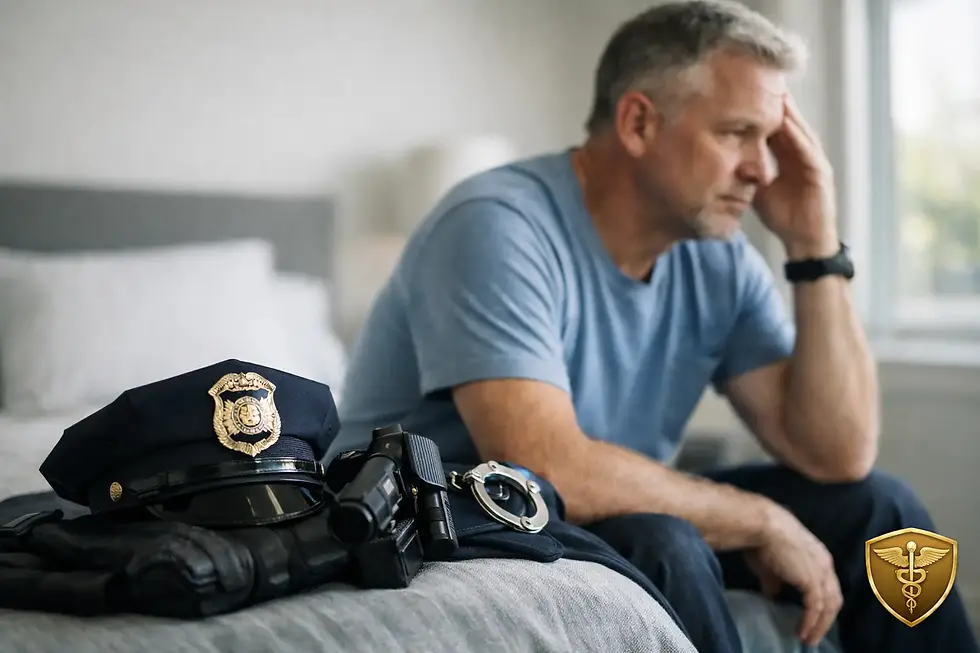
The shift ends, but your system does not always get the message.
For a lot of people working in high-stress roles, that is where the problem starts. Sleep gets lighter. Patience gets shorter. You stay on alert at home, get numb when you do not want to, or snap over things that normally would not matter. Public safety counseling services are built for that kind of strain - the kind that comes from repeated exposure to crisis, pressure, trauma, and responsibility.
This is not about being unable to handle the job. In many cases, it is the opposite. The people who wait the longest to get support are often the ones who are most dependable, most capable, and most used to carrying more than they say out loud.
What public safety counseling services are meant to address
Public safety work asks a lot from the mind and body. Over time, the cumulative effect can show up in ways that are easy to minimize at first. You may still be performing well at work while feeling disconnected at home. You may tell yourself it is just stress, just a rough stretch, or just part of the job.
Sometimes it is a specific incident that pushes things to the surface. Sometimes it is years of exposure to other people’s worst days. Both matter. Counseling for public safety professionals is designed to help with trauma, anxiety, depression, burnout, irritability, grief, relationship strain, sleep problems, and the kind of chronic stress that keeps the body stuck in overdrive.
It can also help when there is no clear label, only the sense that something feels off. You may not call it PTSD. You may just know you are more reactive, more shut down, or more exhausted than you used to be. That is enough reason to talk to someone.
Why standard therapy does not always feel like the right fit
A lot of first responders avoid therapy because they do not want to spend half the session explaining the culture, the dark humor, the chain of command, or why certain calls stay with you. That hesitation makes sense. If a therapist does not understand the environment, trust takes longer.
Public safety counseling services work better when they account for the realities of the job. That includes repeated exposure to trauma, the pressure to stay composed, the concern about confidentiality, and the tendency to push through until symptoms get hard to ignore.
It also means understanding that not every client wants the same kind of care. Some want a place to process a specific incident. Some want practical tools for anger, sleep, or panic. Some need help reconnecting with a spouse or family after months or years of emotional distance. Good therapy meets the person in front of it, not a stereotype of what first responders are supposed to need.
What effective support usually looks like
The most useful counseling is not vague. It gives people a clear path forward.
That may include learning how trauma affects the nervous system, identifying triggers, and building skills to get out of survival mode faster. It may involve cognitive behavioral therapy to challenge patterns that keep anxiety or depression going. It may use DBT-informed strategies to improve emotional regulation, distress tolerance, and communication. In some cases, accelerated resolution therapy can help people process disturbing experiences without getting stuck retelling every detail.
The right approach depends on the person, the symptoms, and the goal. Someone dealing with cumulative burnout may need something different than someone struggling after a critical incident. A dispatcher carrying years of secondary trauma may present differently than an officer dealing with hypervigilance off duty. A firefighter may come in for irritability and later realize unresolved grief is part of what is driving it.
That is one reason cookie-cutter care usually falls short. Real treatment plans should be practical, trauma-informed, and flexible enough to match what is actually happening.
Public safety counseling services are not only for first responders
The stress surrounding public safety work rarely stays contained to one person. Spouses, partners, and children often feel the impact even when no one is talking about it directly. Emotional withdrawal, schedule strain, anger, shutdown, and constant fatigue can affect the whole household.
Counseling can help families make sense of these patterns without blaming each other. It can also help spouses and partners who feel like they are carrying the emotional weight of the home while trying to support someone in a demanding role.
And while these services are especially relevant for law enforcement, firefighters, dispatchers, EMS, corrections, and related professions, the same treatment methods can help anyone dealing with trauma, anxiety, burnout, or major life stress. A good trauma-informed practice knows how to work with high-stress professionals and members of the broader community without forcing everyone into the same box.
Signs it may be time to reach out
People often wait for things to get worse before they consider counseling. That is common, but it is not necessary.
If you are sleeping poorly, staying keyed up, avoiding people, feeling detached, drinking more, losing patience faster, replaying calls, or struggling to feel normal off shift, those are worth paying attention to. The same goes for panic, intrusive memories, dread before work, relationship problems, or the sense that you are constantly running on fumes.
You do not need a total collapse to justify support. In fact, getting help earlier often makes the work easier. Therapy is not only for crisis. It can also be a way to prevent stress from hardening into something more disruptive.
What confidentiality should look like
For many people in public safety, confidentiality is not a side issue. It is the issue.
That concern is valid. Worries about privacy, career impact, fitness-for-duty assumptions, or being seen differently by peers can keep people from reaching out. A counseling practice that works with this population should address confidentiality clearly and directly from the start.
Clients should know what is private, what the legal limits are, and what to expect from the process. When those conversations are straightforward, trust has room to grow. Without that trust, even skilled therapy can stall.
This is also where the tone of care matters. People in high-accountability roles often respond better to therapists who are calm, direct, and respectful - people who do not overdramatize what they are hearing and do not talk down to them. Feeling understood without having to defend, translate, or perform is part of what makes treatment effective.
What to look for in a provider
Not every therapist is the right fit for public safety work. Training matters, but so does credibility.
A strong provider will understand trauma, stress injuries, burnout, and evidence-based treatment. They should be able to explain how they work in plain language. They should also be comfortable with clients who are skeptical, guarded, blunt, or unsure they even want to be there yet.
It helps when therapy feels structured. You should have a sense of what you are working on and why. That does not mean every session follows a script. It means the process is purposeful.
If you are looking for care in Salt Lake County, that same standard applies. Gold Badge Health & Wellness was built around that gap many people feel between clinical knowledge and real-world understanding. For first responders and others carrying heavy stress, that combination can make it easier to start care and stick with it.
A practical way to think about getting help
You do not have to commit to some major personal overhaul to begin counseling. Start smaller than that. Ask whether what you are doing right now is actually working. Ask whether the symptoms are improving on their own or becoming part of daily life. Ask whether the people close to you are noticing the changes before you are willing to admit them.
Good counseling is not about forcing vulnerability or turning you into someone else. It is about helping you get more control back - over your reactions, your sleep, your stress level, your relationships, and your ability to be present when the shift is over.
There is nothing weak about wanting support that works. For people who spend their careers holding the line for everyone else, a safe place to heal what they carry can be one of the most practical decisions they make.


Comments