Resilience Training for Police Teams That Works

Updated: Aug 12
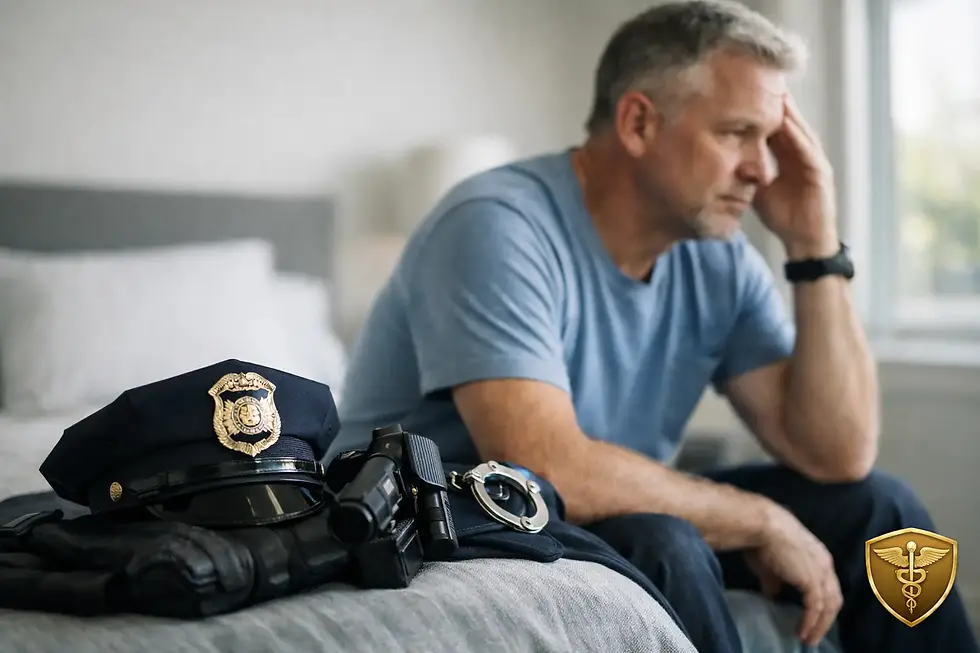
A tough call does not always end when the scene is cleared. It can follow an officer home, show up as poor sleep, a short fuse, detachment, or the feeling that they need to stay on guard even when the shift is over. Resilience training for police teams gives agencies a practical way to address that reality before stress becomes burnout, impaired relationships, misconduct, or a serious mental health crisis.
This is not about telling officers to be tougher or asking them to share personal details in front of coworkers. Good training respects the culture, the job, and the fact that many people in law enforcement are used to handling hard things privately. It focuses on usable skills, clear support pathways, and team practices that make it safer to ask for help when it is needed.
Why police teams need more than a wellness message
Law enforcement professionals operate under pressures that most workplaces do not face. They make quick decisions with limited information, work rotating schedules, deal with conflict, and may witness trauma repeatedly over a career. Even calls that seem routine can carry a heavy emotional load when they involve children, violence, loss, or a threat to a colleague.
Stress is not proof that someone is weak or unfit for the job. It is a normal human response to repeated exposure, high responsibility, and limited recovery time. The concern is what happens when stress stays unaddressed. Officers may begin withdrawing from family, relying on alcohol or other coping habits, becoming more reactive, or losing the sense of purpose that once anchored them.
A generic wellness email or one-time motivational presentation rarely changes those patterns. Teams need training that recognizes operational realities. If a strategy cannot be used after a difficult call, in the middle of a long shift, or at home after a sleepless night, it is unlikely to stick.
What effective resilience training for police teams includes
Effective training is practical, credible, and built around the actual demands of the work. It should help officers recognize stress early, respond to it without shame, and know how to support a partner without trying to become that person’s therapist.
Skills for the moment stress hits
The first goal is not to eliminate stress. That is neither realistic nor necessary. The goal is to help people regain enough control to think clearly, stay grounded, and make good choices.
Training can teach simple regulation skills such as controlled breathing, sensory grounding, and noticing physical signs of escalation. These tools are not a substitute for clinical care after trauma, but they can lower the intensity of a stress response in the moment. When practiced regularly, they are more available when an officer is tired, angry, or overwhelmed.
Officers also benefit from learning how stress affects attention, memory, sleep, and communication. Understanding these reactions can reduce self-blame and make it easier to recognize when a normal response has become a pattern that needs more support.
Peer support without pressure
Coworkers often notice changes before a supervisor or family member does. A partner may see someone becoming unusually quiet, missing roll call conversations, taking more risks, or reacting harder than usual to small problems. Training should give teams language for checking in directly and respectfully.
A useful check-in is not an interrogation. It can be as simple as, “You seem off since that call. I’m not asking you to talk about it here, but I wanted you to know I noticed.” The next step may be a conversation, peer support, a chaplain, an employee assistance program, or a confidential therapist who understands first responder work.
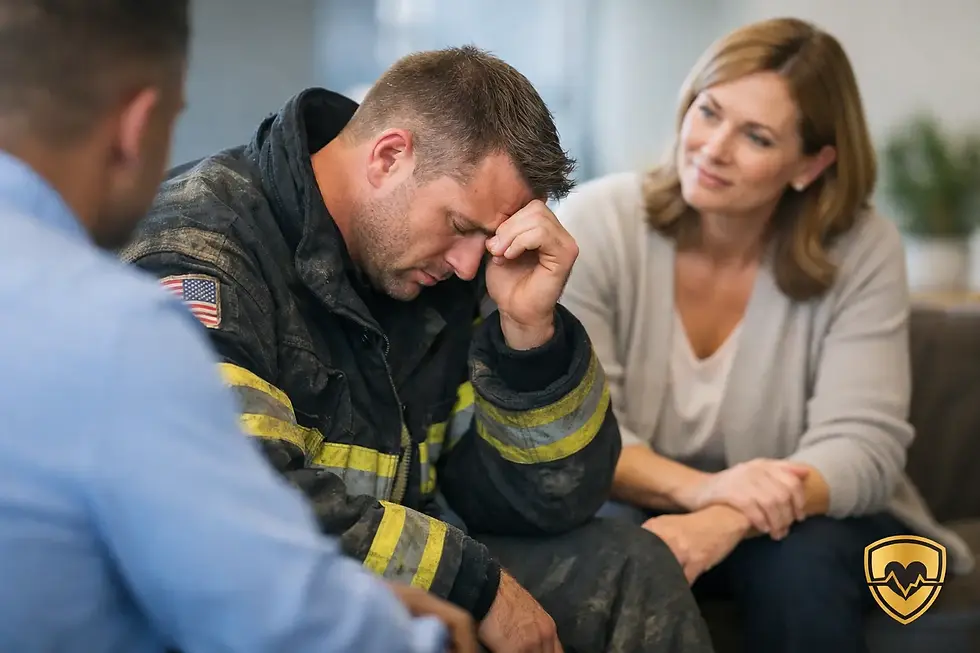
The key is to avoid forcing disclosure. Mandatory emotional processing in a group can backfire, especially soon after a critical incident. People process differently. A strong team culture offers options and follows up without making someone perform vulnerability.
Leadership practices that match the message
Resilience training will not carry much weight if the workplace punishes people for using it. Leaders set the standard through what they reinforce, what they ignore, and how they respond when an officer speaks up.
Supervisors do not need to diagnose mental health concerns. They do need to know how to recognize behavior changes, have a private and respectful conversation, and connect personnel with appropriate resources. They also need to avoid treating every concern as a discipline issue.
Credibility matters here. If leaders talk about wellness but reward exhaustion, ridicule counseling, or treat time off as a lack of commitment, officers will get the real message quickly. On the other hand, a supervisor who checks in consistently, protects confidentiality where possible, and uses support resources without shame can change the climate of an entire unit.
Training is not therapy, and that distinction matters
Team-based training can improve awareness, communication, and daily coping. It can also reduce the isolation that often develops in high-stress work. But it is not a replacement for individual treatment when someone is dealing with PTSD symptoms, depression, panic, substance misuse, suicidal thoughts, or trauma that continues to interfere with life outside the job.
A well-designed program makes that distinction clear. It teaches teams how to spot when extra support may be needed and gives them a confidential route to get it. That matters because officers may avoid care if they fear career consequences, judgment, or having to explain police culture from the beginning.
Trauma-informed therapy offers a place to work through what training cannot resolve. Approaches such as Cognitive Behavioral Therapy, DBT-informed skills, and Accelerated Resolution Therapy can help people reduce symptoms, process distressing experiences, and build more effective responses. The right approach depends on the person, their symptoms, and what they are ready to address.
How agencies can make training stick
The best programs are not treated as a box to check during annual training. They are part of an ongoing commitment to keeping personnel healthy enough to do demanding work over time.
Start by identifying the pressures affecting the team. A patrol division managing frequent critical incidents may need a different emphasis than dispatch, investigations, corrections, or command staff. Anonymous feedback can help agencies understand whether the biggest concerns are sleep, staffing strain, peer conflict, traumatic exposure, family stress, or barriers to care.
Then make training specific. Scenarios, examples, and language should reflect the roles in the room. Officers are more likely to engage when the presenter understands that a difficult call may be followed by paperwork, another call, court, overtime, and a drive home where the nervous system is still activated.
Delivery matters too. A single long session may be less useful than shorter, repeated training that leaves room for practice and questions. Confidentiality should be addressed plainly at the beginning, including the limits of confidentiality and how referrals work. People deserve to know what happens if they speak up.
Finally, measure more than attendance. Agencies can look at whether supervisors feel more prepared to respond to concerns, whether personnel know where to access confidential support, and whether employees are using resources earlier rather than only in crisis. The goal is not to demand proof that people are resilient. It is to build conditions where they have a real chance to recover.
A culture of support protects the whole team
Police work will always involve stress, uncertainty, and exposure to difficult human experiences. Resilience does not mean those experiences stop affecting people. It means the team has practical ways to respond before the weight becomes unmanageable.
At Gold Badge Health & Wellness, that starts with respect for the job and for the person behind the badge. Support works best when it is confidential, straightforward, and grounded in the reality that asking for help is not stepping away from the mission. It is one way to stay capable of carrying it.
The strongest teams are not the ones that pretend nothing gets to them. They are the ones that notice when someone is carrying too much and make it possible for that person to get back on solid ground.

Comments