Choosing a Speaker on First Responder Mental Health

Updated: Aug 12
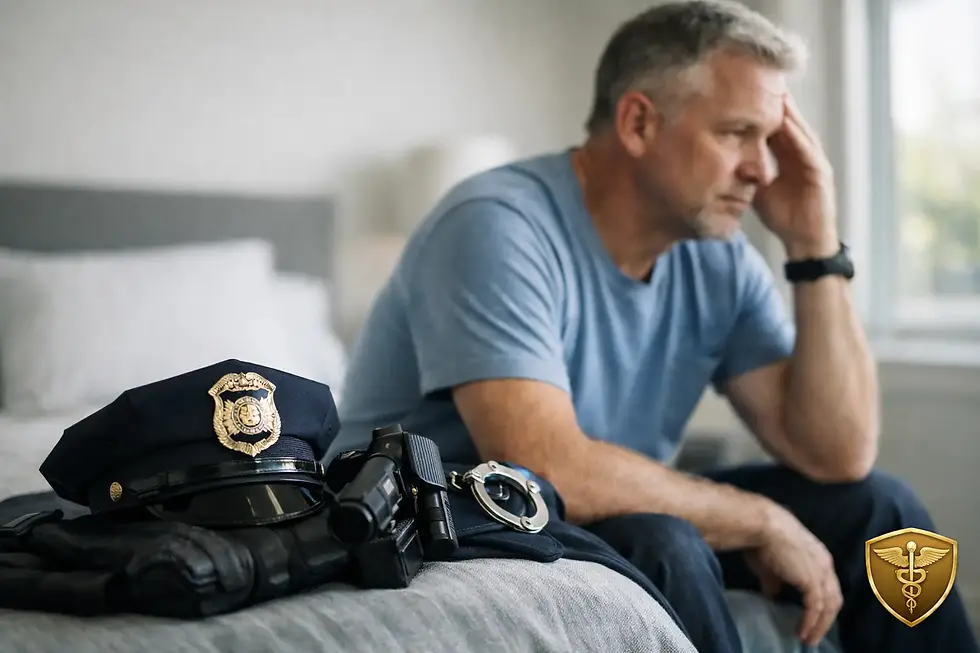
A bad call does not always show up as a crisis right away. It may look like short sleep, more irritability at home, pulling away from the crew, trouble concentrating, or a responder who is still performing well but feels increasingly worn down. A qualified speaker on first responder mental health can give teams language for these realities and practical ways to respond before stress becomes harder to manage.
But not every wellness presentation is a good fit for public safety. First responders do not need a motivational speech that ignores the job, asks people to share personal details in a room full of coworkers, or treats resilience like a matter of trying harder. They need training that respects the culture, recognizes cumulative stress and trauma, and offers tools people can actually use.
Why First Responder Mental Health Training Matters
Law enforcement officers, firefighters, dispatchers, paramedics, corrections professionals, and other public safety personnel are routinely exposed to situations most people never see. Some calls are clearly traumatic. Others are not dramatic on paper but add up over years: infant deaths, domestic violence, fatal crashes, suicides, threats, shift work, public scrutiny, staffing shortages, and the pressure to make the right decision quickly.
That exposure does not affect every person in the same way. One responder may develop sleep problems after a critical incident. Another may feel fine for months, then find that a sound, smell, anniversary, or routine call brings the experience back. Burnout can also build gradually when operational demands outpace recovery.
A well-designed training does not label ordinary stress as a disorder. It helps people understand the difference between a difficult reaction and a pattern that is beginning to interfere with work, relationships, health, or safety. That distinction matters because early support can be far more manageable than waiting until someone is at a breaking point.
For agencies and leaders, this is not just a morale issue. Unaddressed stress can affect decision-making, sleep, communication, retention, physical health, family life, and team culture. Mental health training should support the mission by helping people stay grounded, connected, and able to recognize when more support is needed.
What a Speaker on First Responder Mental Health Should Understand
Credentials matter, but the right speaker needs more than a polished presentation. First responder audiences can quickly tell when someone is speaking in generalities or does not understand the realities of the work. The goal is not to glorify suffering or assume every responder has the same experience. It is to speak plainly about the conditions people work under.
A strong speaker understands that public safety culture often values self-reliance, competence, and keeping personal issues separate from the job. Those values can be strengths. They can also make it harder to ask for help when stress starts spilling into sleep, relationships, mood, or performance.
The speaker should address that tension without shaming people for being guarded. Saying “just reach out” is rarely enough. A useful presentation explains what support can look like, how confidentiality generally works, what questions to ask before starting therapy, and how to take a first step without making a public announcement.
Clinical training is especially valuable when the topic includes trauma, PTSD, depression, substance use, suicide prevention, or critical incident stress. Lived experience can build credibility, but it does not replace sound clinical judgment. The best speakers combine both where possible: a real understanding of the job and a trauma-informed, evidence-based approach to care.
Trauma-Informed Does Not Mean Graphic
A trauma-informed presentation is not one that recounts the most disturbing stories in the room. In fact, unnecessary detail can leave people activated, shut down, or feeling exposed. Training should be direct without being sensational.
A speaker should set clear expectations, avoid pressuring attendees to disclose personal experiences, and offer options for people who need a moment to step out or follow up privately. They should also be careful with exercises that involve body awareness, guided imagery, or sharing. Those tools may help some people, but they should never be forced in a group setting.
The right approach creates safety through predictability, choice, respect, and practical information. It gives attendees something they can use without demanding that they reveal what they carry.
What Useful Training Actually Includes
The most effective presentations are specific. They make room for the reality that stress management is not one-size-fits-all, especially for people working nights, rotating shifts, long overtime hours, or back-to-back high-intensity calls.
Useful content may cover how stress affects the nervous system, why sleep often becomes difficult after repeated exposure, and how anger, numbness, isolation, or overworking can be signs that someone is struggling. It should also include simple, field-tested ways to reset after a call, transition out of work mode, and reduce the buildup of stress over time.
Practical tools are better than vague advice. For example, a speaker may teach a brief grounding strategy that can be used before driving home, a way to recognize early signs of escalation, or a structured conversation a spouse can use when they are concerned. They may explain how cognitive behavioral strategies can challenge unhelpful thinking patterns, or how trauma-focused therapy can help people process experiences that remain stuck.
The training should also address peer support carefully. Peers often notice changes first, but they are not therapists and should not be expected to carry someone else’s crisis alone. Teams need clear guidance on how to check in, what warning signs warrant immediate action, and when to involve clinical or emergency support.
Match the Presentation to the Audience
The best format depends on who is in the room and what the organization needs. A 45-minute roll-call presentation may be appropriate for introducing the topic and reducing stigma. A longer workshop allows more room for skill-building, questions, and discussion about real barriers to care.
A mixed audience also changes the conversation. Dispatchers may need a training that recognizes the impact of hearing traumatic events without being physically present. Firefighters may want to discuss station culture, sleep disruption, and post-call decompression. Command staff may need guidance on how leadership responses shape trust. Spouses and families benefit from practical information about the cumulative effects of the work, while still respecting the responder’s privacy.
One presentation cannot solve every concern. If an agency has recently experienced a line-of-duty death, suicide, major incident, or a pattern of burnout, a general wellness talk may not be enough. That situation may call for a more tailored response, private clinical support, or ongoing consultation. A responsible speaker will be honest about that rather than overselling a single event.
Questions to Ask Before Booking a Speaker
Before bringing someone in, ask how they tailor content for law enforcement, fire, dispatch, EMS, corrections, or the specific group you serve. Ask what their clinical qualifications or relevant professional background are, how they handle disclosures or distress during a presentation, and whether they provide a clear path to additional support afterward.
It is also worth asking what the speaker will not do. Will they avoid forced participation? Will they keep personal stories relevant and limited? Will they speak honestly about confidentiality and its limits? These details affect whether attendees feel respected or put on the spot.
Finally, consider what happens after the room clears. A strong presentation should be part of a larger commitment to wellness, not a box to check once a year. That may include access to confidential therapy, peer support structures, supervisor education, family resources, and regular opportunities to build practical skills.
Make the Message Easier to Act On
People are more likely to seek support when the next step is clear, private, and realistic. Leaders can help by sharing available resources without making assumptions about who needs them, by protecting time for appointments when possible, and by avoiding language that treats care as weakness or a career risk.
At Gold Badge Health & Wellness, the focus is on practical, confidential care that respects what first responders carry. That same standard should guide every training conversation: people do not need to prove they are struggling enough before they deserve support.
The right speaker can start a conversation that has been avoided for too long. More importantly, they can help create a culture where asking for help is treated as a responsible next step, not a failure of strength.


Comments